Zekavat Receives NSF Funding For Research, Education

-From Tech Topics December 5, 2004

Assistant Professor Seyed "Reza" Zekavat (Electrical and Computer Engineering) has received two National Science Foundation grants totalling more than $800,000.

With a $350,000 grant, he aims to conduct fundamental research on wireless local positioning systems. With a $462,000 award, he will develop a new multidisciplinary version of the traditional course, "Introduction to Electrical Engineering for Non-Electrical Engineers."

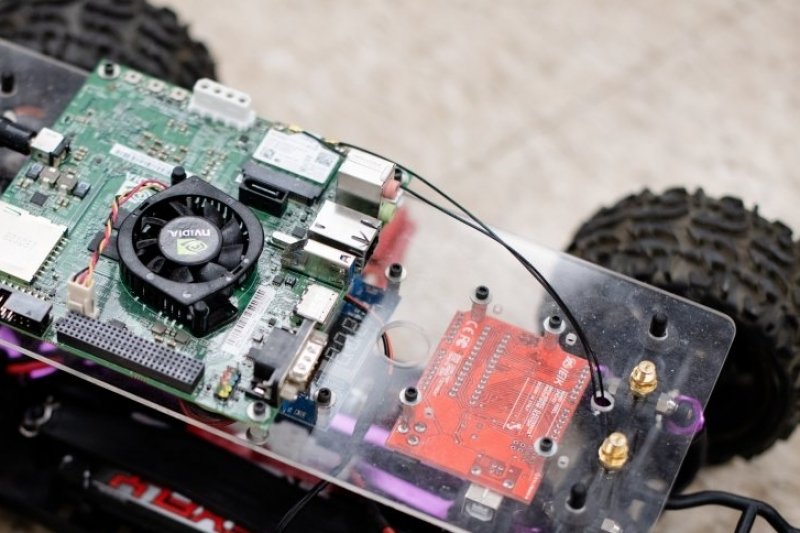
Global positioning systems provide you with your location on the planet, while wireless local positioning systems (WLPS) tell you where others are positioned with respect to you. Unlike GPS, however, WLPS can operate indoors and in urban areas.

Zekavat gives an example. "Say you have 10 robot firefighters in a burning building," he says. "They should know where the others are." WLPS could also be used to improve road safety. "If you had transceivers in all vehicles, you could know the position of the other cars and help drivers avoid accidents," Zekavat said. The Department of Transportation has been encouraging automakers to develop such safety devices to install in all vehicles.

Wireless positioning systems have two main components: the dynamic base station and the transceiver. The base station sends a signal out asking, in effect, "Is anybody there?" The transceiver responds with a "Here I am" signal. From the direction of the signal and the time it takes to get an answer, the base station can tell where the transceiver is.

Such information would be a godsend for the military. "Every soldier could have a simple transceiver that costs less than 5 cents strapped to his wrist," Zekavat says. "It could help keep us from bombing our own troops."

The project will support a new lab and three graduate students and will involve about 15 undergraduates through the Wireless Communications and Integrated Systems Enterprise. Zekavat will be collaborating with researchers at George Mason University on the project.

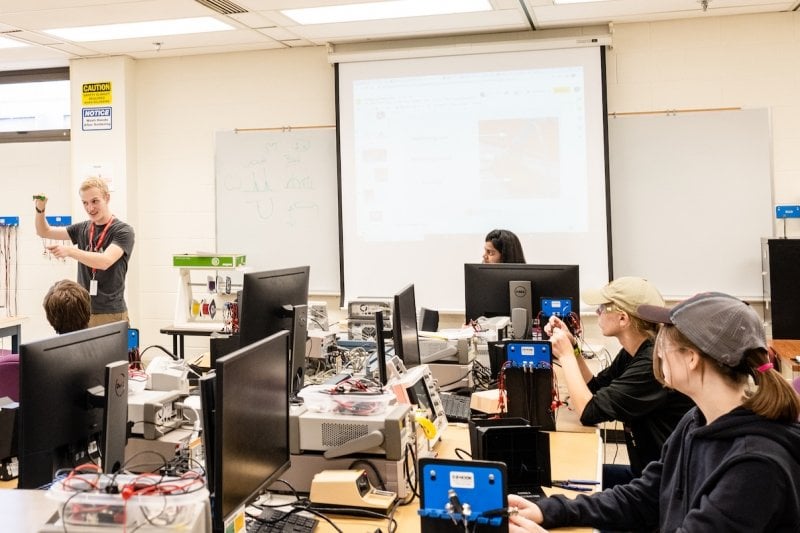
Wireless positioning systems are an example of the type of technology he plans to consider in his new curriculum teaching electrical engineering to non-majors. With his second NSF grant, he will address shortcomings in the current teaching approach.

"Every type of engineering uses electronic devices," he notes. But there's a hitch. While engineers in all fields need to know the fundamentals of electrical engineering, what chemical engineers need to know may have little in common with what's important to mechanical engineers.

That's the main problem with most EE-for-nonmajors courses. Students complain that the one-size-fits-all approach doesn't give them the information they need.

Over the next four years, Zekavat plans to address that shortfall by developing a basic lecture and lab course for all the students. In addition, anything that isn't important for all non-major students would be taught via a Web-based teaching system. "So we'd tell the civil engineering majors they need to look at a lesson on the Web specifically designed for them that wouldn't be necessary for mechanical
engineers," he said. "Some topics we might not cover in class at all, but we'd tell chemical engineering majors to review them independently."

The project involves a team of researchers from all of Michigan Tech's engineering departments, as well as the Department of Education. The first version of the curriculum, due out in January 2006, will serve as the basis for a new textbook.


Go to Michigan Tech main page See Campus Map Search Whole Campus Directories The Whole University Directory from A to Z Goes to Electrical and Computer Engineering Click here to Contact Electrical and Computer Engineering